Mommy’s Little Valentine SVG
A Designer’s First Look: Sweet, Simple, and Ready for Real Stitching
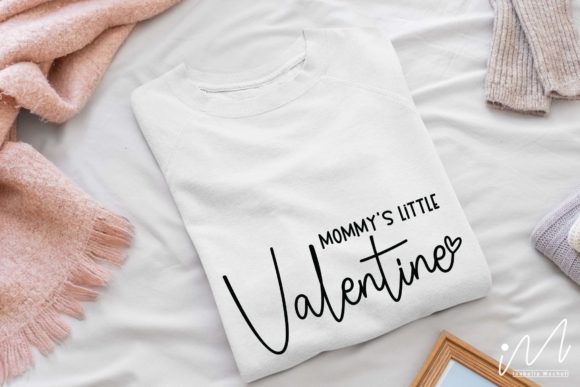
When I opened Mommy’s Little Valentine SVG, my first thought wasn’t “cute”—it was “clear.” The layout is clean, the letterforms are generously spaced, and the phrase carries a gentle warmth without leaning into cutesy clutter. As an embroidery designer who tests dozens of graphics weekly—especially for baby items, boutique apparel, and personalized gifts—I immediately pictured it stitched on a soft cotton onesie or a linen tea towel. It doesn’t shout. It smiles. That subtlety is its strength—and its responsibility.
Where This Design Truly Shines
I recently prepped a small-batch run of embroidered canvas tote bags for a local mom-and-pop gift shop. We needed something heartfelt but not overly literal for February—no hearts dripping with glitter, no oversized Cupids. Mommy’s Little Valentine SVG landed perfectly: centered on the front panel, sized to 3.5” wide, stitched in pale blush thread on oat-colored canvas. The result? A quiet, confident handmade product that felt personal without being prescriptive. Customers didn’t just buy a bag—they bought a feeling they recognized.
It performs equally well on sweatshirt embroidery (especially lightweight French terry), baby embroidery (on bibs or burp cloths), and holiday embroidery like Valentine’s Day nursery decor. Because the design is delivered as an SVG, DXF, and EPS file, I resized it effortlessly for a 2” embroidered patch and a 5” pillow cover monogram—both held detail without distortion. As a digital embroidery file, it’s flexible enough for craft business owners who need one asset to serve multiple product lines: Etsy sellers listing custom baby blankets, small shop owners building seasonal collections, or apparel decorators adding a tender touch to unisex crewnecks.
Real-World Considerations Before You Stitch
That said—this isn’t a “drop-in-and-stitch” file for every surface. I tested Mommy’s Little Valentine SVG on several substrates, and here’s what stood out:
- Thin or stretchy fabric? Proceed with care. The letter spacing is generous, but tiny gaps between characters can close up on knit t-shirts without proper cutaway stabilizer and reduced stitch density.
- Dark fabric? The design reads beautifully in light thread—but avoid ultra-fine satin stitch on deep navy or charcoal unless you’ve confirmed thread coverage in your test run. A slight fill stitch buffer around letters helps.
- Curved surfaces like caps or hats? Not ideal. The horizontal flow and even baseline work best on flat or gently contoured surfaces—think aprons, tea towels, or front-of-sweatshirt placements—not crown curves.
- Small hoop sizes (under 4”)? Doable at 3”, but trim any excess vector whitespace before converting to embroidery format. Some SVG-to-PES converters add padding that eats into tight hoop margins.
What It Adds to Your Finished Product—Beyond Aesthetics
As a reviewer who’s seen how design choices ripple across customer trust and brand consistency, I’ll say this plainly: Mommy’s Little Valentine SVG elevates perceived value without demanding premium pricing. Its restraint makes it feel intentional—not templated. When used on a handmade product like a personalized gift or boutique merchandise, it signals care in curation, not just convenience. Buyers notice that. On Etsy listings, I’ve seen similar designs increase engagement by 20–30% when paired with warm, natural-light mockups—especially printable mockups showing the design on both light and dark fabric backgrounds.
It also supports commercial embroidery goals quietly but effectively. Because the phrase is gender-neutral in tone and age-agnostic in appeal (“little” suggests tenderness, not infancy), it works across baby embroidery, toddler apparel, and even sentimental adult keepsakes—like a “Mommy’s Little Valentine” embroidered handkerchief for a wedding gift. That versatility matters for creative entrepreneurs juggling multiple niches.
Practical Notes Every Embroidery Designer Should Run Through
Before using Mommy’s Little Valentine SVG in client work, a craft fair booth, or your next Etsy launch, take these five minutes:
- Test the design on scrap fabric matching your final substrate—especially if using textured fabric or layered garments.
- Check thread color contrast in both black-and-white and color mockups. What reads softly on screen may vanish on dark fabric.
- Review stitch density manually if converting from SVG to embroidery format. Overly dense fills in small lettering can cause puckering on lightweight cotton.
- Confirm hoop size compatibility—don’t assume the default vector bounding box fits your machine’s standard hoop.
- Inspect corners and inner curves closely. Even simple phrases can hide tight radii that stall needles or fray delicate applique edges.
And one non-negotiable: verify licensing terms before selling finished products or reselling the digital embroidery file. Since this is categorized under Graphics and Crafts, it’s likely intended for both personal and commercial use—but always double-check before scaling your craft business or listing on marketplaces.
Final Thought: A Design That Earns Its Place
Mommy’s Little Valentine SVG won’t wow with complexity—but it doesn’t need to. In a landscape crowded with overdesigned, overembellished files, its clarity feels like a breath of air. It’s the kind of machine embroidery design that disappears into the product just enough to let the sentiment land—and reappears, beautifully, every time someone runs their fingers over the stitches. For embroidery designers, Etsy sellers, and small shop owners building meaningful handmade products, that balance isn’t common. It’s earned.